
Carton IBCs
Industrial intermediate bulk liquid packaging that ships flat.
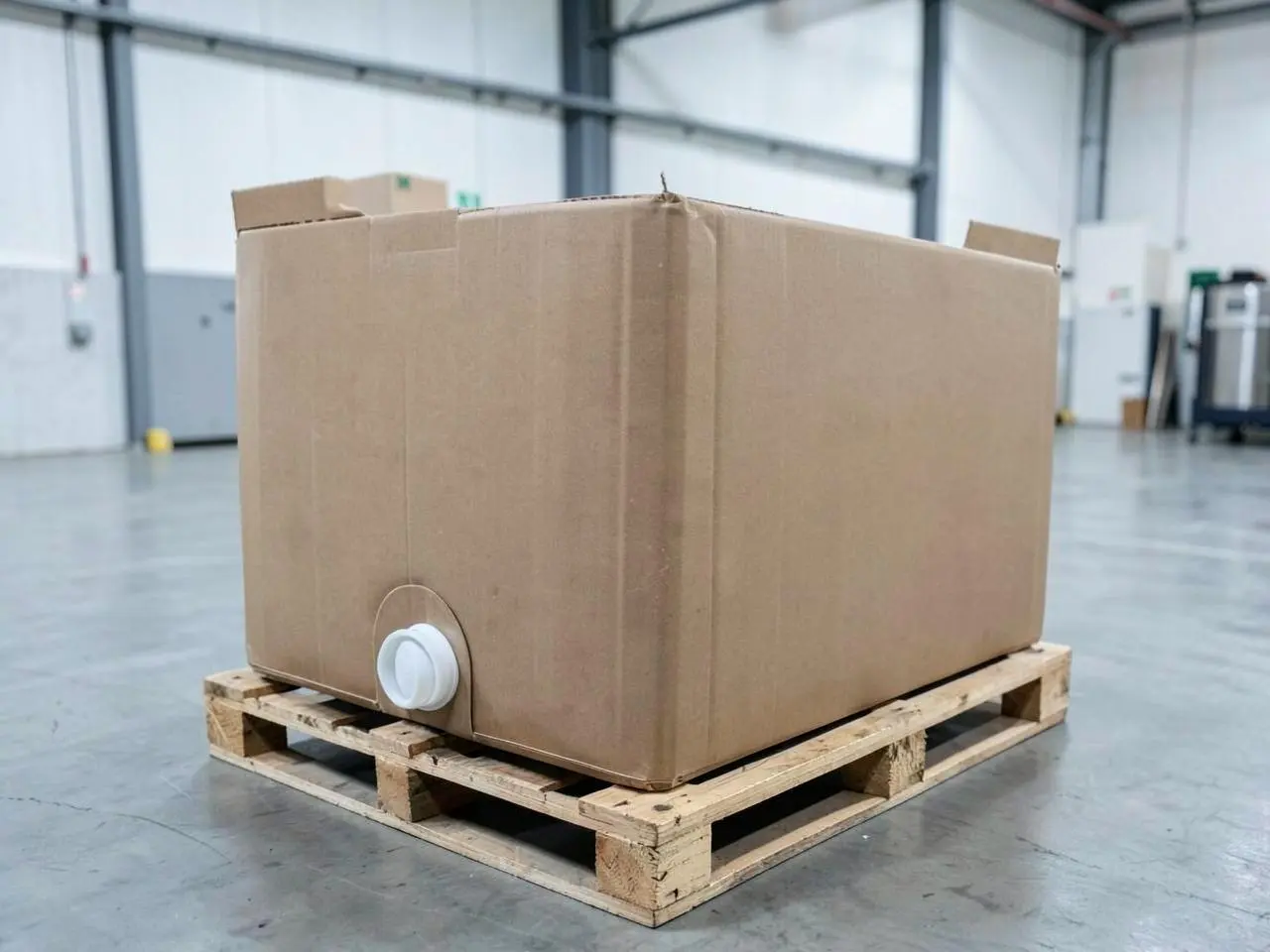
Carton IBCs are industrial intermediate bulk liquid packaging solutions: a corrugated intermediate bulk container with a pallet base, multi-layer inner liner and top cap, used for one-way bulk liquid and semi-solid shipments where returning a rigid IBC is not practical. Also called corrugated IBCs, cardboard liquid totes, bag-in-box bulk containers or disposable liquid totes, they are sourced in the common 110, 220, 275 and 330 gallon sizes, plus 1,000 litre export versions, on 48x40, 44x44, 48x48 and 32x32 pallet footprints.
Applications
Typical options
- 110, 220, 275 and 330 gallon; 1,000 litre export
- 48x40, 44x44, 48x48 and 32x32 pallet footprints
- Corner or flush 2" and 3" evacuation
- Valve, spout or drain fitment positions
- Food-grade, barrier or metallised liner films
- Pop-open or knocked-down-flat delivery
- Wood or plastic pallet base
- Custom printed outer
Specifications
- Construction
- Multi-wall corrugated body, pallet base, top cap
- Liner
- Multi-layer PE or barrier film with fitment
- Capacities
- 110 / 220 / 275 / 330 gal, 1,000 L
- Tare weight
- Approx. 24-90 lb depending on size and style
- Stacking
- Commonly stacked up to four high empty in storage
- Banding
- 0.022" x 3/4" steel or equivalent composite
Sizes, materials and certifications vary by supplier and run. Availability is confirmed against your quantity, specification and destination.
Why it's used
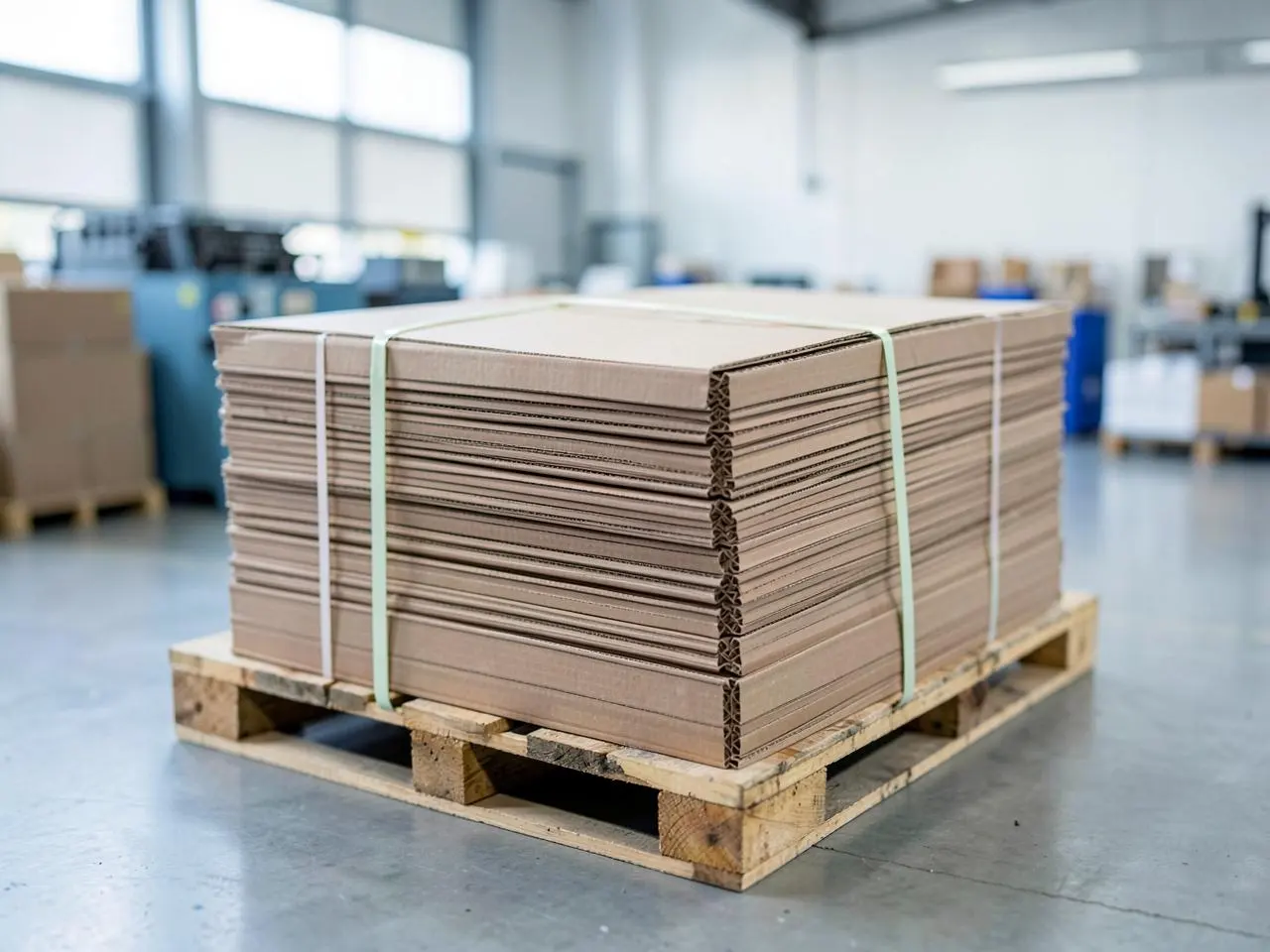
- Ships flat or in cartridge form, so empties take a fraction of the space drums do.
- No return freight, no wash-out, no empty-container fleet to manage.
- Low tare weight puts more product on each truckload, inbound and outbound.
- Corrugated body, liner and pallet separate at the end for recycling.
- Replaces multiple drums or pails per shipment, cutting handling and disposal.
Request a quote on Carton IBCs
Send quantity, size and destination. A photo of what you use today is enough to start.
One pallet of empties instead of a truck of drums.
A corrugated liquid IBC is a bag-in-box system: a multi-layer inner liner does the containment, the corrugated body and pallet do the structure, and a valve or drain does the discharge. Empty units arrive flat or in cartridge form, get assembled at the fill line and are recycled after use — so the empty-container logistics that make drums and rigid IBCs expensive largely disappear.
Standard capacities, plus 1,000 L export
Typical empty stacking in storage
Approximate tare weight without pallet
Where it replaces drums and pails
One 275 or 330 gallon unit takes the place of five or six 55-gallon drums. That means fewer connections at the fill line, fewer empties to handle, less floor space per gallon shipped, and no drum disposal or reconditioning at the receiving end.
Footprints and formats
- 48x40 for standard racking and dry or refrigerated storage
- 48x48 for 330 gallon domestic loads
- 44x44 and 1,000 litre versions built to maximise 20 ft and 40 ft container space
- 32x32 for smaller 110 gallon batches
- Pop-open bodies for fast assembly, or completely knocked down flat for maximum inbound freight efficiency
Filling and evacuation
- Corner or flush evacuation in 2" and 3"
- Valve with plunger or ring cutter for clean opening of the liner
- Self-venting fill tubes and steel fill fixtures
- Tamper-evident seal options on the discharge
- Gravity discharge requires the unit to sit above the receiving vessel, or a pump connection
Liner selection
Liner film is where most specification work happens: food contact, oxygen or moisture barrier, hot fill temperature, viscosity and shelf-life target all change the structure. Plain PE, co-extruded multi-layer, metallised barrier and aseptic structures are all available; tell us the product and the shelf life you need and we quote the structure that matches.
Handling and transit
- Steel or composite banding to 0.022" x 3/4" or equivalent
- Four-way or two-way stringer pallet bases in wood or plastic
- Non-hazardous liquids; regulated products need a UN-rated alternative
- Filled units are not designed for repeated re-handling like a rigid IBC
Industries
- Food and beverage concentrates, purées and syrups
- Dairy, liquid egg and aseptic products
- Edible oils and sauces
- Personal care and household liquids
- Non-hazardous industrial chemicals and adhesives
Food-grade, kosher and dairy approvals apply to specific liner films and are held by the manufacturers of those films, not by CAQUIN. We provide the supplier documentation with each quote.
Using this today?
Alternatives worth comparing
You may also want to explore
What is the difference between an IBC and a drum?
Scale, handling and how the product comes out — and which one suits you depends on how you use the material, not just how much you buy.
LearnWhat are the alternatives to a 55-gallon drum?
Six directions worth looking at, and the question each one answers.
LearnWhat is an IBC liner?
A bag inside the container so the container never touches the product.
CompareSteel drum vs. IBC
One unit of roughly 55 gallons against one of roughly 275 to 330 — and everything that changes downstream.
CompareReusable vs. disposable tote
Whether the container comes back changes what you should buy.
TermIBC
Intermediate bulk container — a large reusable or single-trip container, usually around 275 or 330 gallons.
TermGaylord
A common name for a large corrugated bulk box sized to a pallet.
TermBulk box
A pallet-footprint corrugated container for dry bulk material or parts.
TermReturnable packaging
Packaging designed to come back and be used again, usually within an agreed loop.